Introduction
Organ transplantation is a life-saving medical procedure that has revolutionized healthcare, offering hope to patients suffering from end-stage organ failure [1]. Despite significant advancements in medical science, the shortage of organs for transplantation remains a critical issue globally [2]. This disparity is particularly evident in India; while the country ranks third globally in the total number of transplants performed, the actual organ donation rate remains strikingly low at approximately 0.8 per million population (PMP) as of 2022. The gap between the demand and availability of organs is widening, leading to high mortality rates for patients on waiting lists.
Reluctance toward organ donation in India is often driven by a complex interplay of religious beliefs, cultural influences, and a significant lack of knowledge regarding the legal and procedural aspects of the process. To meet the growing demand, there is an urgent need to raise awareness and motivate the population. In this context, medical professionals serve as the backbone of the organ procurement system. Undergraduate medical students, as future doctors and healthcare leaders, are positioned to be the primary advocates for this cause. Their possession of accurate knowledge and a positive attitude is essential, as they will eventually be responsible for counseling grieving families, declaring brain death, and dispelling myths within the community.
While general awareness is increasing, there remains a need for localized data to understand the specific perceptions of medical students in different regions. Most existing literature highlights that even within the medical community, misconceptions about legal frameworks and donor eligibility persist. Therefore, the present study was planned to assess the knowledge, awareness, and attitude toward organ donation among undergraduate medical students at a Government Medical College in Western India (Baramati, Maharashtra), with the goal of identifying educational gaps that can be addressed in the medical curriculum.
Materials and Methods
Study design, setting, and study population
A cross-sectional study was conducted over a period of six months, beginning in August 2023, at Punyashlok Ahilyadevi Holkar Government Medical College, Baramati, Maharashtra. The study population primarily consisted of undergraduate M.B.B.S. students across different academic years (2019 to 2023 batches) to assess their evolving perspectives throughout their medical education.
Sample size and sampling procedure
The sample size for this study was 113 participants. A convenience sampling technique was employed to enroll undergraduate medical students. Participation was voluntary, and the recruitment was conducted through digital platforms to ensure reach across different professional years of the M.B.B.S. course. Inclusion criteria required participants to be enrolled students of the medical college who provided informed consent for the study.
Research instrument and data collection procedure
A pre-designed, structured, and validated questionnaire was used as the primary research instrument. To ensure ease of access and maintain anonymity, the questionnaire was administered via Google Forms. The tool was divided into specific sections: (a) Socio-demographic profile, including age, sex, and year of admission; (b) Knowledge and awareness regarding organ donation, covering sources of organs, specific transplantable organs, and legal frameworks; and (c) Attitudes toward the procedural aspects of donation and consent. The data collection process ensured that no personal identifiers were linked to the responses to maintain confidentiality.
Data analysis
The collected data were exported from Google Forms to Microsoft Excel for cleaning and then analyzed using SPSS (Statistical Package for the Social Sciences) version 26. Descriptive statistics, including frequencies, percentages, mean, and standard deviation, were used to summarize the demographic characteristics and knowledge scores. Inferential statistics, such as the Chi-square test, were utilized to determine associations between variables, and binary logistic regression analysis was applied to identify significant predictors of a positive attitude toward organ donation. A p-value of less than 0.05 was considered statistically significant.
Ethical considerations
The study protocol was submitted for review and received approval from the Institutional Ethics Committee (IEC) of Government Medical College and General Hospital, Baramati. Written informed consent was obtained from all participants digitally before they could proceed to the questionnaire. Participants were informed about the purpose of the study and their right to withdraw at any time without any academic or personal penalty. All data were kept confidential and used solely for research purposes.
Results
Demographical characteristics of participants
The study included a total of 113 participants. The vast majority of the study population (109, 96.5%) was above the age of 18, reflecting the undergraduate medical student demographic. Females constituted the majority of the participants (65, 57.5%), while males accounted for 41.6% (47).
In terms of academic distribution, the highest level of participation came from the 2019 admission batch (39, 34.5%), followed by the 2022 batch (29, 25.7%). Students from the 2020 and 2023 batches each contributed 15.0% (17 participants each) to the study, while the 2021 batch accounted for 9.7% (11).
Table 1: Demographic characteristics of participants (N=113)
| Variable | Categories | Frequency (n) | Percentages (%) |
| Age | Above 18 | 109 | 96.5 |
| Below 18 | 4 | 3.5 | |
| Gender | Female | 65 | 57.5 |
| Male | 47 | 41.6 | |
| Other | 1 | 0.9 | |
| Admission Year | 2019 | 39 | 34.5 |
| 2020 | 17 | 15.0 | |
| 2021 | 11 | 9.7 | |
| 2022 | 29 | 25.7 | |
| 2023 | 17 | 15.0 |
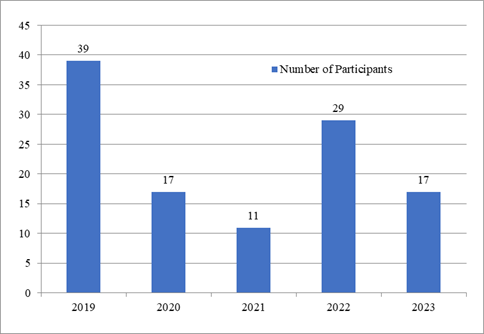
Figure 1: Distribution of Study Participants by Academic Batch
Knowledge of participants regarding organ donation
General awareness regarding organ donation was exceptionally high among the participants, with 111 (98.2%) stating they had heard of the procedure. Regarding the sources of organs, the majority (86, 76.1%) correctly identified that organs could be retrieved from a combination of living donors, cadavers, and brain-dead patients.
The study assessed students' specific knowledge of the limitations of donation. When asked to identify which organ cannot be donated following brain death, 90.3% (102) correctly identified the brain as the exception. Similarly, when assessing knowledge of living donation, 91.2% (103) correctly identified that the heart shall not be donated by a living donor, demonstrating a strong grasp of the physiological requirements for donor survival.
Table 2: Knowledge of study participants regarding organ donation (N=113)
| Knowledge question (response) | Frequency (n) | Percentages (%) |
| Have you heard about organ donation?(Yes) | 111 | 98.2 |
| Which of these are sources for donating organs? (*All of the above) | 86 | 76.1 |
| After brain death, the following organs shall be donated except? (Brain) | 102 | 90.3 |
| Which organ shall not be donated from a living donor? (Heart) | 103 | 91.2 |
| Is there any law for organ donation in India? (Yes) | 111 | 98.2 |
| Is any age eligible for organ donation if the organ is healthy? (Yes) | 101 | 89.4 |
| Who can give consent for donation of a relative's organ? (Immediate family) | 99 | 87.6 |
(*All of the above means- Donating organs from alive people; Donating organs from cadavers; Donating organs from brain; Donation from alive people and brain dead people or a person who has just died so that the organs are viable)
Knowledge of participants related to legal and procedural components of organ donation
Knowledge regarding the legal framework in India was high, with 111 participants (98.2%) aware of the existence of specific laws governing organ donation. Regarding procedural criteria, 101 participants (89.4%) correctly identified that there is no specific age limit for being a donor, provided the organs are healthy.
A significant majority of the participants (99, 87.6%) correctly identified that immediate family members (father, mother, brother, or sister) are authorized to give consent for the donation of a relative's organs. This suggests a solid foundational understanding of the legal and ethical requirements of the Transplantation of Human Organs Act among the surveyed undergraduate medical students.
Table 3: Knowledge regarding legal and procedural entities (N=113)
| Knowledge questions on legal/ procedural entities | Frequency (n) | Percentages (%) |
| Awareness of Organ Donation Law in India (Yes) | 111 | 98.2 |
| Understanding of Minimum Age for living Donor (18 years) | 101 | 89.4 |
| Identification of Legal Consent Authority (Immediate Family) | 99 | 87.6 |
Attitude of participants toward organ donation
The study revealed a strong sense of social responsibility among medical students, though a significant "knowledge-action gap" was identified regarding personal registration. While 101 participants (89.4%) expressed a definitive willingness to encourage and spread awareness about organ donation in their families and neighborhoods, actual donor card ownership remains very low. Only 3 participants (2.7%) reported being organ donor card holders, while 110 (97.3%) had not yet registered.
Regarding professional awareness, 66 participants (58.4%) were aware of the National Organ and Tissue Transplant Organization (NOTTO) register. A significant majority (104, 92%) correctly understood that family consent is mandatory to retrieve organs from a brain-dead donor. Furthermore, when asked about donor eligibility, 86.7% (98) correctly identified that various categories of individuals can be donors ("All of the above"), while 11.5% (13) believed only immediate family members were eligible.
Table 4: Attitude and professional perception of participants (N=113)
| Questions to check the attitude/ perception toward organ donation | Yes | No | Maybe |
| Willingness to spread awareness in the community | 101 (89.4%) | 0 (0%) | 12 (10.6%) |
| Awareness of the NOTTO Organ Donor Register | 66 (58.4%) | 27 (23.9%) | 20 (17.7%) |
| Knowledge that family consent is mandatory | 104 (92%) | 3 (2.7%) | 4 (3.5%) |
| Possession of an organ donor card | 3 (2.7%) | 110 (97.3%) | -- |
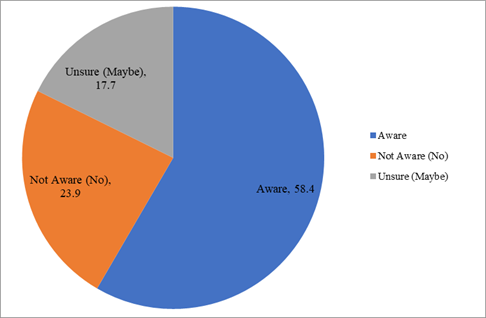
Figure 2: Professional Awareness: Knowledge of NOTTO Organ Donor Register
Knowledge of legal and procedural components
Knowledge of the legal consequences of organ trade was nearly universal in this cohort. A total of 109 participants (96.5%) were aware that buying or selling organs is a punishable offense under the Transplantation of Human Organs Act, with only 2 participants (1.8%) unaware of this legal provision. This indicates that while clinical procedural knowledge is still developing, the ethical and legal boundaries of the practice are well-understood by the students.
Table 5: Knowledge regarding legal consequences and procedural mandates (N=113)
| Knowledge of Legal Entities | Frequency (n) | Percentages (%) |
| Aware that buying/selling organs is a punishable offense (Yes) | 109 | 96.5% |
| Aware that family consent is mandatory for retrieval (Yes) | 104 | 92.0% |
Discussion
Our study found that nearly all undergraduate medical students in Western India possess a high foundational awareness of organ donation, yet specific procedural and legal intricacies remain an area for improvement. Unlike the study by Krishna et al.,[1] which observed variations across different tiers of medical professionals, our cohort of M.B.B.S. students showed a high level of correct physiological knowledge, particularly regarding the boundaries of donation.
Regarding awareness levels, it is encouraging that 98.2% of our participants reported having heard of organ donation. This finding is consistent with studies conducted among medical undergraduates by Ganta et al.,[2] and Swamy et al.,[3]. In our study, 76.1% of students correctly identified that organs can be retrieved from living, cadaveric, and brain-dead sources. This understanding of brain death as a precursor to donation is vital, as noted by Kumar [4], though the reference study [1] identified a significant gap in this specific knowledge among students in the Eastern part of India.
When examining knowledge about specific organs, our participants demonstrated a robust understanding of the limitations of donation. For example, 90.3% correctly identified the brain as the organ that cannot be donated after brain death, and 91.2% correctly identified the heart as an organ that cannot be donated by a living donor. This exceeds the awareness levels found in other regional studies, such as the study in Telangana by Priyank et al.,[5] which revealed a relatively low overall awareness (37%) regarding identifying transplantable organs, and a study in Haryana by Chawla et al.,[6] which showed similar gaps.
In our study, awareness of registration systems showed room for growth; 58.4% of participants were aware of the National Organ and Tissue Transplant Organization (NOTTO) register. Similar to the reference study [1], which found low awareness regarding donor cards (34%), and findings by Vincent et al.,[7] our study highlights a substantial need for increased institutional initiatives to bridge the gap between knowing about donation and knowing how to register.
A significant point of convergence between our data and the reference study [1] is the "knowledge-action gap." While 89.4% of our participants expressed a positive attitude and willingness to spread awareness in their families and neighborhoods, actual donor card possession was strikingly low at 2.7% (n=3). This discrepancy confirms that positive attitudes do not always translate into registration, a trend observed globally among medical students in Poland [8] and Bangladesh [9]. This suggests that "procrastination of the healthy," as discussed by Hasan et al.,[10] remains a barrier even among those with medical training.
Regarding legal and procedural components, 96.5% of our participants were aware that buying or selling organs is a punishable offense under the Transplantation of Human Organs Act [11]. This level of legal literacy is higher than that observed in the reference study (89.6%) and suggests a strong ethical foundation in our cohort, echoing findings from Southern India [12]. Furthermore, 92% of our participants correctly recognized that family consent is mandatory for retrieval from brain-dead donors. This aligns with findings in Maharashtra by Giri et al.,[13] where medical undergraduates were aware of the necessity of family consent, though the precise legalities often remained a "notable gap" in other rural settings [14].
The influence of professional identity is clear, as our students feel a high degree of responsibility toward community education, a sentiment shared by medical professionals in other national representative studies [15]. As future doctors, their attitudes are often shaped by a mix of curriculum and cultural background, where religion is generally viewed as supportive of the cause [16,17].
The primary strength of our study lies in its focused assessment of future doctors at a crucial stage of their professional development in Western India. However, limitations include the cross-sectional design, which only identifies associations rather than causality [18]. The self-reported data introduces the risk of social desirability bias, where participants may provide socially acceptable responses [19]. Despite these, the study provides a vital baseline for implementing targeted educational modules to increase the organ donation rate in India [20].
Conclusions
This study highlights a strong foundational knowledge and a highly positive attitude toward organ donation among undergraduate medical students at Government Medical College, Baramati. While awareness of legal frameworks and physiological limitations is high, a significant gap remains between the willingness to advocate and personal registration as a donor. Nearly all students recognize their role as future educators, yet few have completed the registration process themselves. These insights underscore the need for the medical curriculum to move beyond theory and provide practical guidance on registration and the legal-procedural navigation of transplantation. By fostering a culture of "leading by example," medical institutions can empower future doctors to effectively address the organ shortage crisis in India.
Declarations
Author Contributions
All authors have reviewed the final version of the manuscript and agreed to be accountable for all aspects of the research work.
Concept and design: Dr. Tejas Raut, Dr. Pradnya Bhalerao, Dr. Suraj Jadhavar, Dr. Sangram Kharmale, Dr. Neha Kamble, Dr. Pratiksha Kakad
Acquisition, analysis, or interpretation of data: Dr. Tejas Raut, Dr. Pradnya Bhalerao, Dr. Suraj Jadhavar, Dr. Sangram Kharmale, Dr. Neha Kamble, Dr. Pratiksha Kakad
Drafting of the manuscript: Dr. Tejas Raut, Dr. Pradnya Bhalerao, Dr. Suraj Jadhavar, Dr. Sangram Kharmale, Dr. Neha Kamble, Dr. Pratiksha Kakad
Critical review of the manuscript for important intellectual content: Dr. Tejas Raut, Dr. Pradnya Bhalerao, Dr. Suraj Jadhavar, Dr. Sangram Kharmale, Dr. Neha Kamble, Dr. Pratiksha Kakad
Supervision: Dr. Tejas Raut, Dr. Pradnya Bhalerao, Dr. Suraj Jadhavar, Dr. Sangram Kharmale, Dr. Neha Kamble, Dr. Pratiksha Kakad
Human subjects
Informed consent was obtained from all individual participants included in the study. The study protocol was reviewed and received ethical clearance from the Institutional Ethics Committee (IEC) of Punyashlok Ahilyadevi Holkar Government Medical College and General Hospital, Baramati.
Animal subjects
All authors confirm that this study did not involve animal subjects or animal tissue.
Conflicts of interest
In compliance with the ICMJE uniform disclosure form, all authors declare the following: Payment/services info: All authors have declared that no financial support was received from any organization for the submitted work.
Financial relationships
All authors have declared that they have no financial relationships at present or within the previous three years with any organizations that might have an interest in the submitted work.
Other relationships
All authors have declared that there are no other relationships or activities that could appear to have influenced the submitted work.